

Is this limited edition the future of Ducati superbikes?
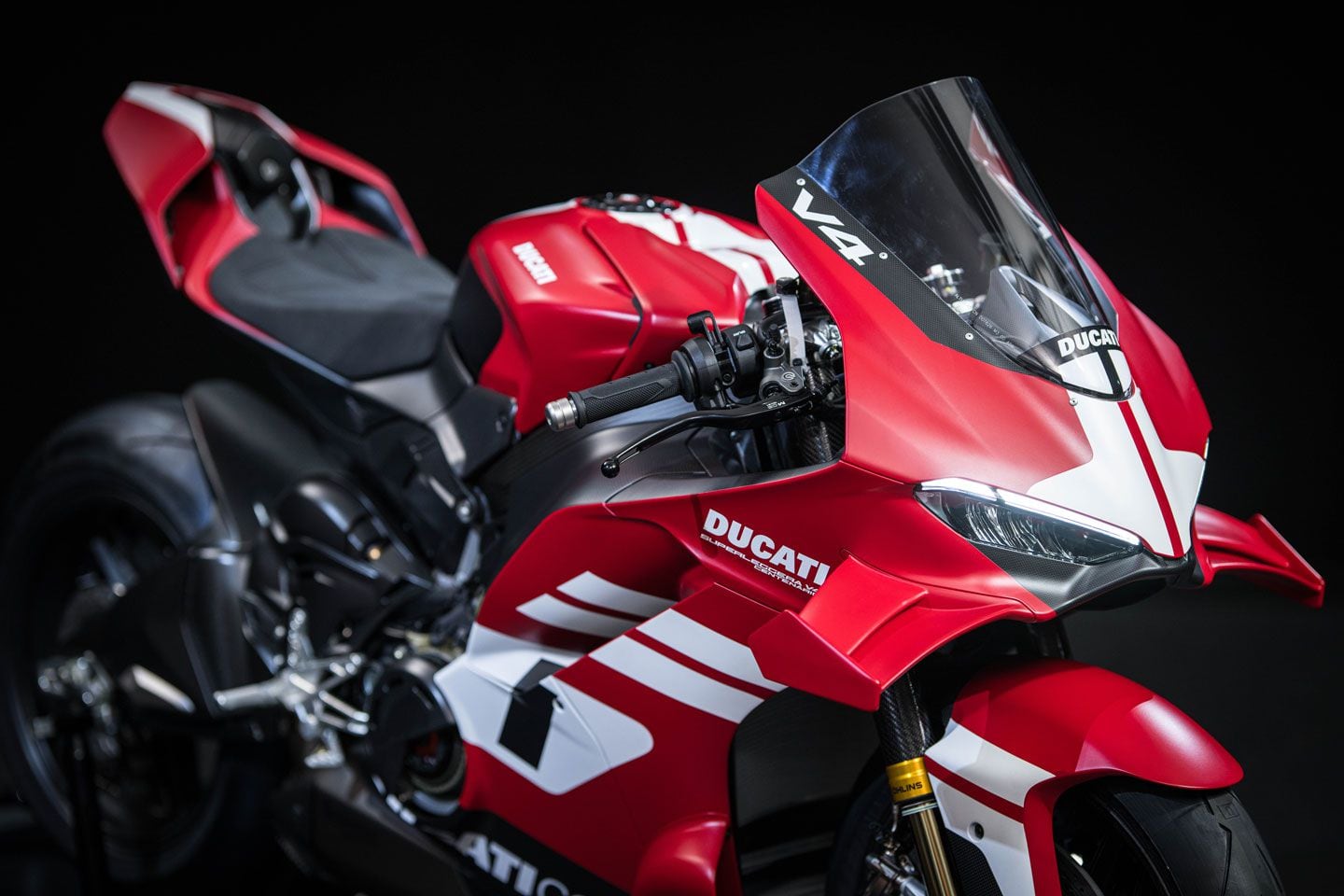

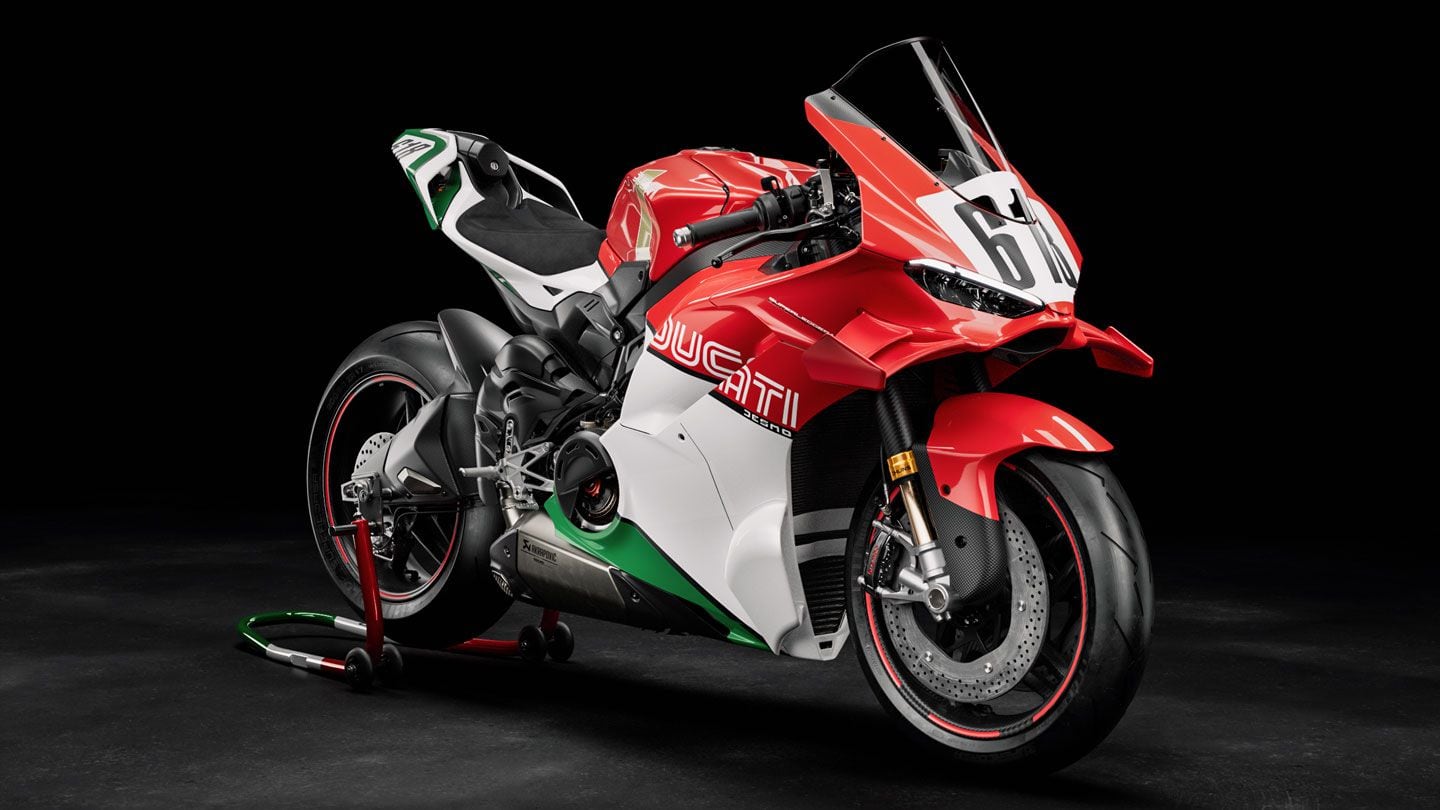
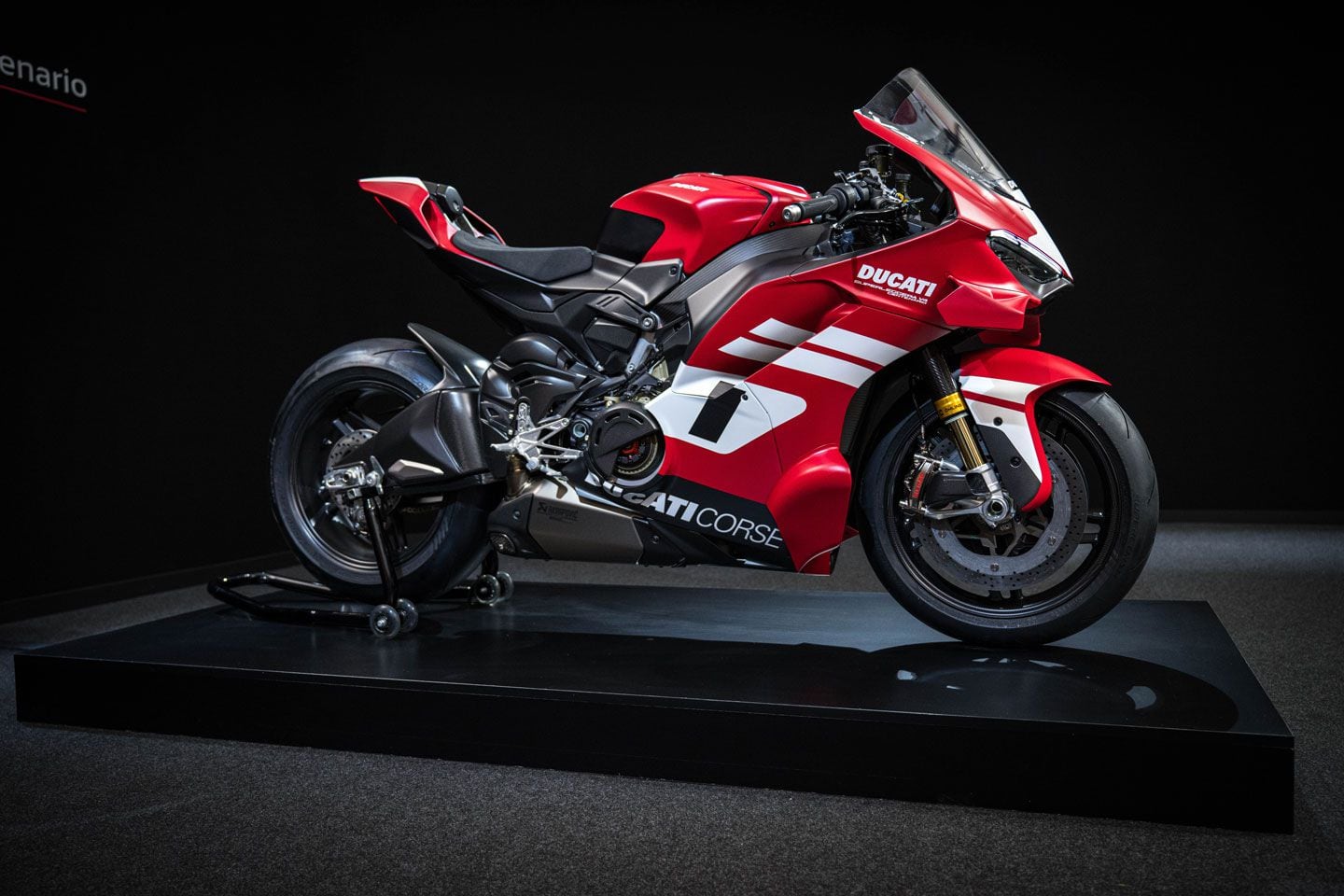
The 2027 Ducati Superleggera V4 Centenario is a limited-edition, 225-hp, carbon-fiber superbike that gives a glimpse of what is to come for future Ducati sportbikes.Ducati
What have we here? We have learned to expect Ducati to offer exclusive models—often bearing famous names—to the collector market. This is a wise hedge against the recent timidity of the mass market.
But the 2027 Superleggera V4 Centenario with a new Desmosedici Stradale R 1100 engine looks like a step beyond. With its many complete novelties, this motorcycle could be a way to fund tooling for a big step forward. Ducati has a long tradition of launching the next engine iteration and other innovations as special models that show the future.
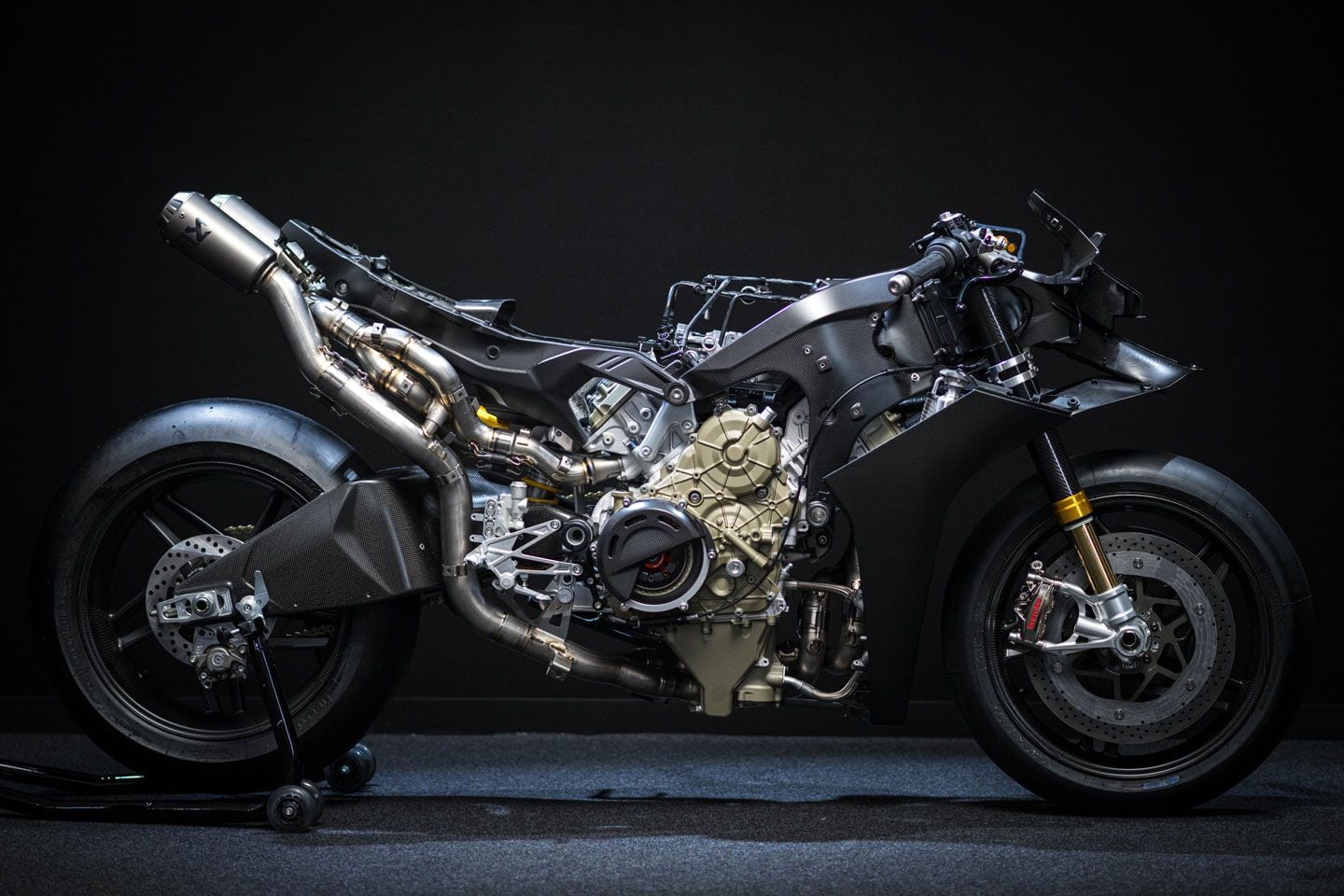
Here, we have an all-new engine, refined in so many details. A carbon multi-piece chassis so attenuated—and beautiful, like Brancusi’s “Bird in Space”—that it seems more idea than structure. Advanced Brembo Hyction CCB brakes elevate from traditional Superbike-inspired metal discs to 340mm carbon-reinforced ceramic. Carbon wheels are 300 grams lighter than on the Panigale V4. And isn’t it high time that carbon outer upper fork tubes escaped from the MotoGP paddock?
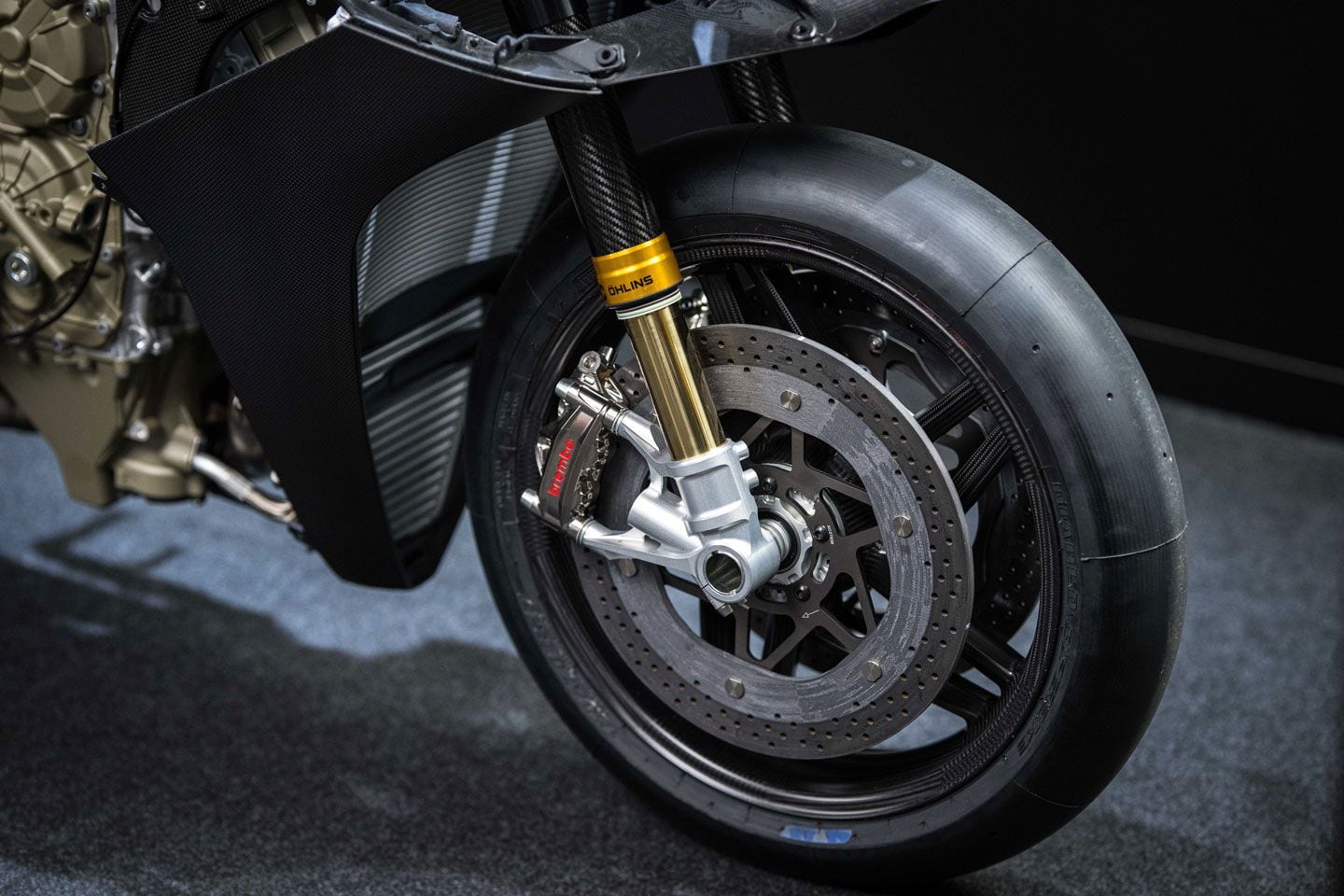
Calipers are machined-from-solid-billet Brembo GP4-HY units with four pistons, including positive pad retraction. In the past, pad retraction was accomplished by the grip of the piston seals against a special surface finish. When pad wear finally exceeded the resilience of the piston seals, the pistons would slip through the seals by the necessary amount. On the GP4-HY calipers, dedicated springs retract the pads more quickly. This reduces brake drag and heat buildup. The pistons are radially drilled near the pad backing-plate contact to reduce heat that reaches the brake fluid. The oblique pad slide helps the pads meet the disc at the optimum angle.
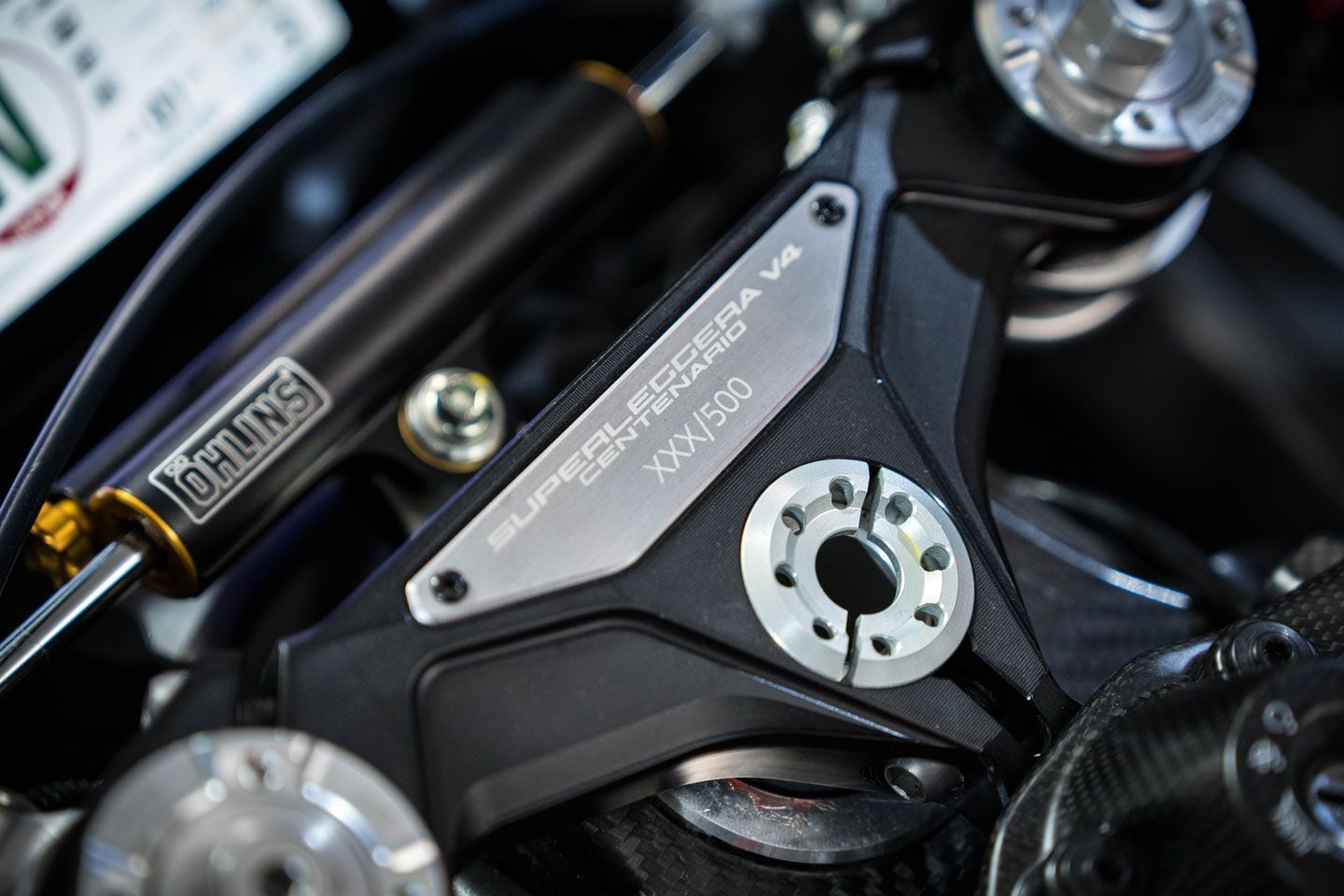
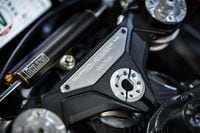
Five hundred numbered examples of these machines will be built. Most will be sold in hours.
All-important Figures
Time for numbers: With an Akrapovic race exhaust and Ducati’s trick oil, the new engine produces 250 hp to drive 167 kg (368.2 lb) of weight. That’s a specific power of 1.5 kg/hp or 3.3 lb/hp. In street trim, power is just 225 hp.
The engine retains the MotoGP bore of 81mm and stroke of 53.5mm to equal 1102.7cc.
Carbon Fiber Chassis
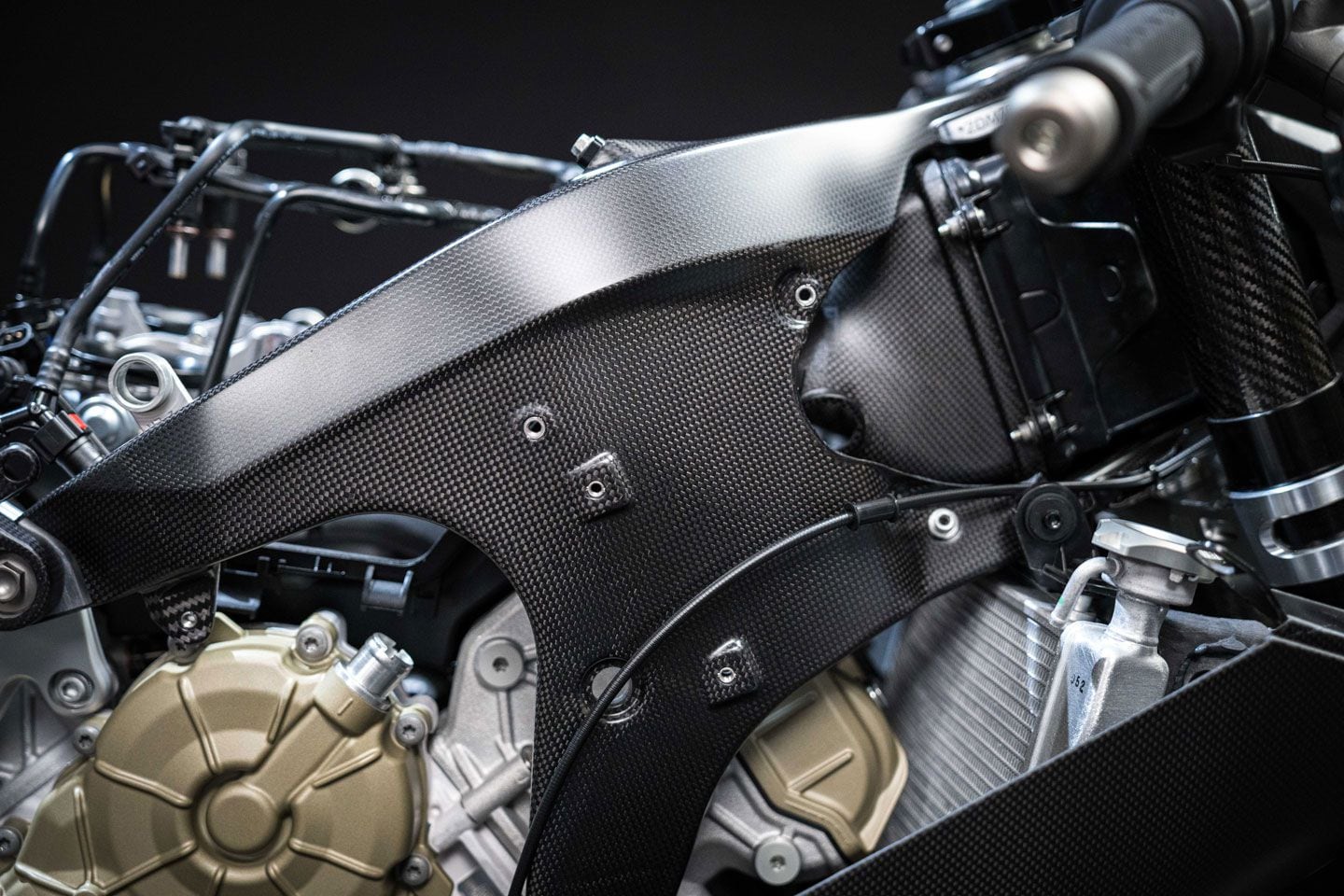
The front chassis has a familiar base but in carbon fiber: four legs engaging the sides of the rear cylinder head and at the base of the front cylinder with slender struts extending forward to the top and bottom of the steering-head (there are many claimants to the volume in that region). The whole is able to flex sideways on its legs providing the front wheel with lateral compliance when at lean angle, acting to keep the tire in contact with pavement roughness rather than rigidly skip from crest-to-crest.
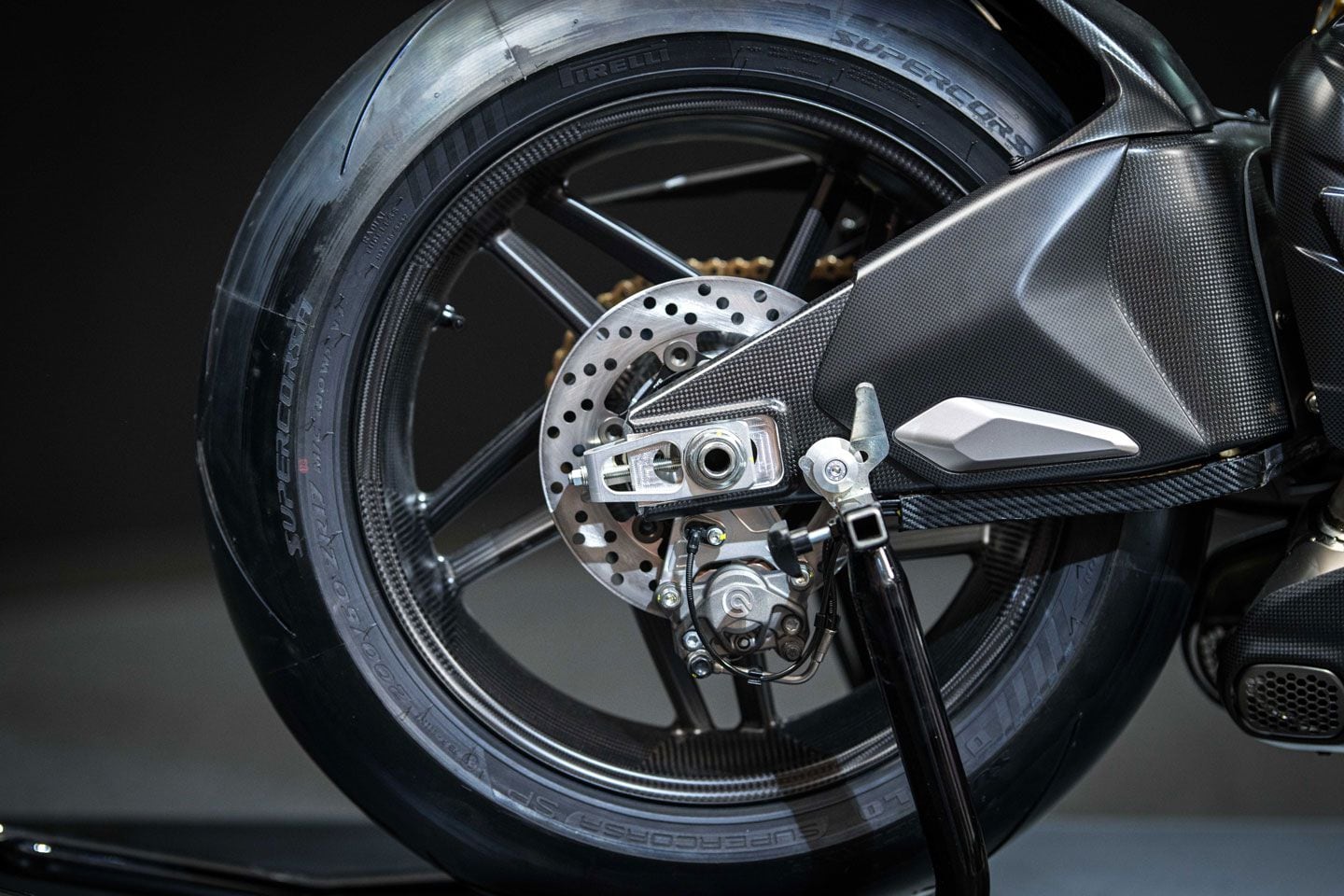
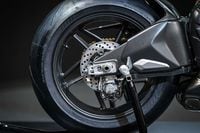
The dual-beam carbon swing-arm, 21% lighter than an aluminum equivalent, is made by a “sacrificial mandrel” process. This is similar in concept to the lost wax casting technique used to produce gas turbine blades.
What, no single-sided arm? This raises the general question: do Ducatisti want Ducati to lead the way in motorcycle design, or celebrate the past?
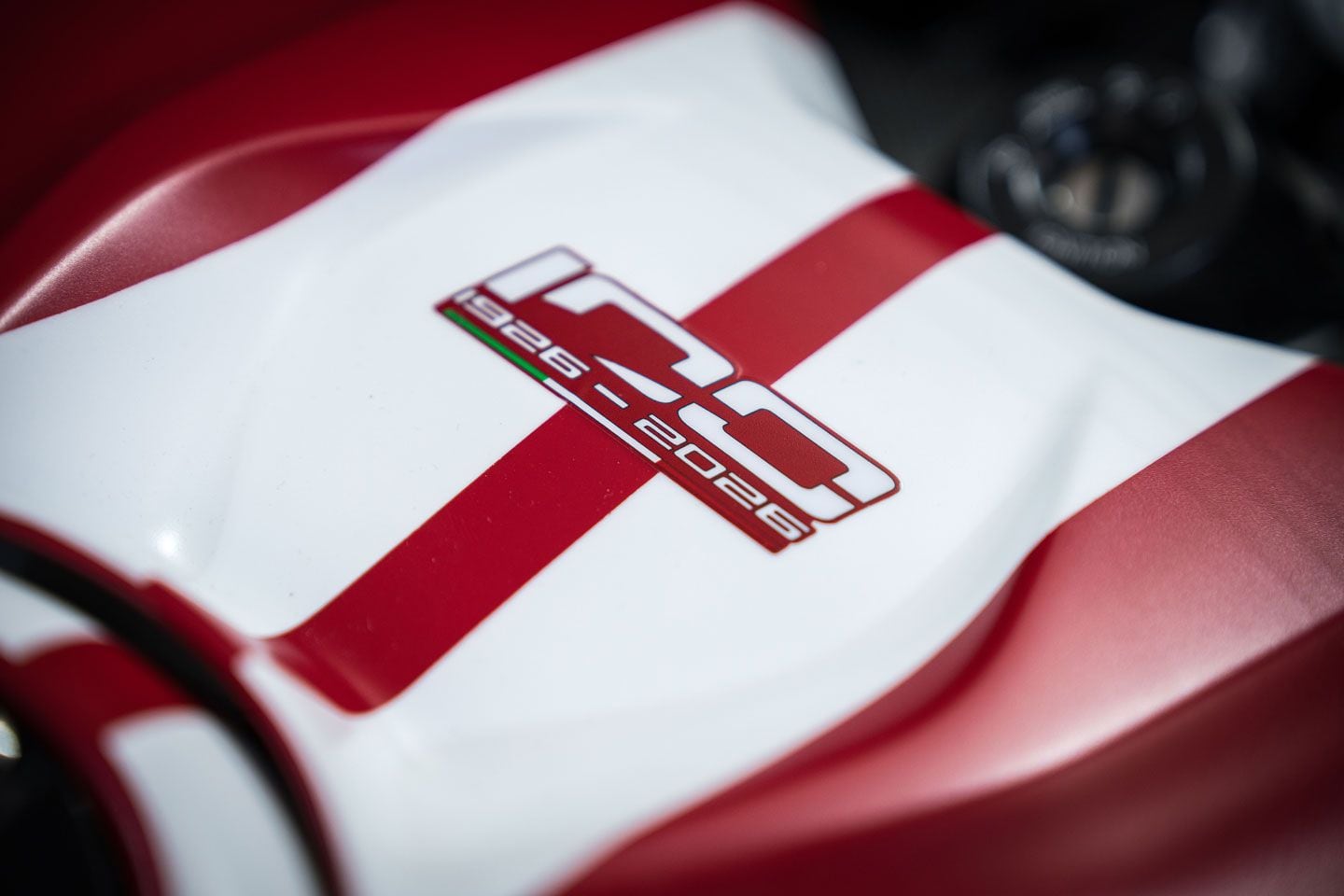

As with aircraft carbon structures, inspection must validate every part. Three methods are applied:
- Active Transient Thermography.: The part is heated by external sources, causing heat to flow inward. An IR camera maps surface temperature discontinuities in heat flow that can result from subsurface anomalies.
- Phased-array Ultrasonic Inspection: A phased array consists of an X-Y array of separately-controlled sources, producing a focused steerable beam. This detects delams or porosity with positional accuracy.
- Computed Axial Tomography (CAT): As in medical CAT applications, this provides detailed 3D imaging of internal structure. Many variations exist.
How can a chassis be so compact? As John Britten said so memorably in the early 1990s, “Once you’ve worked with directional materials, metals just seem like tightly packed sand.”
This takes some getting-used-to, but over 100 years ago, materials scientists knew that normal polycrystalline metals displayed only a tiny fraction of the strength their molecular bonds are capable of. Directional materials like CFRP actually come close to realizing this strength, so a little can do a lot.
Desmosedici Stradale R 1100
Years ago I loved the jingle of dry clutch plates as the rider searched for neutral with the clutch pulled in. No more searching; Ducati have placed neutral at the bottom, not between first and second. There is a neutral lock-out that prevents false neutrals once under way.
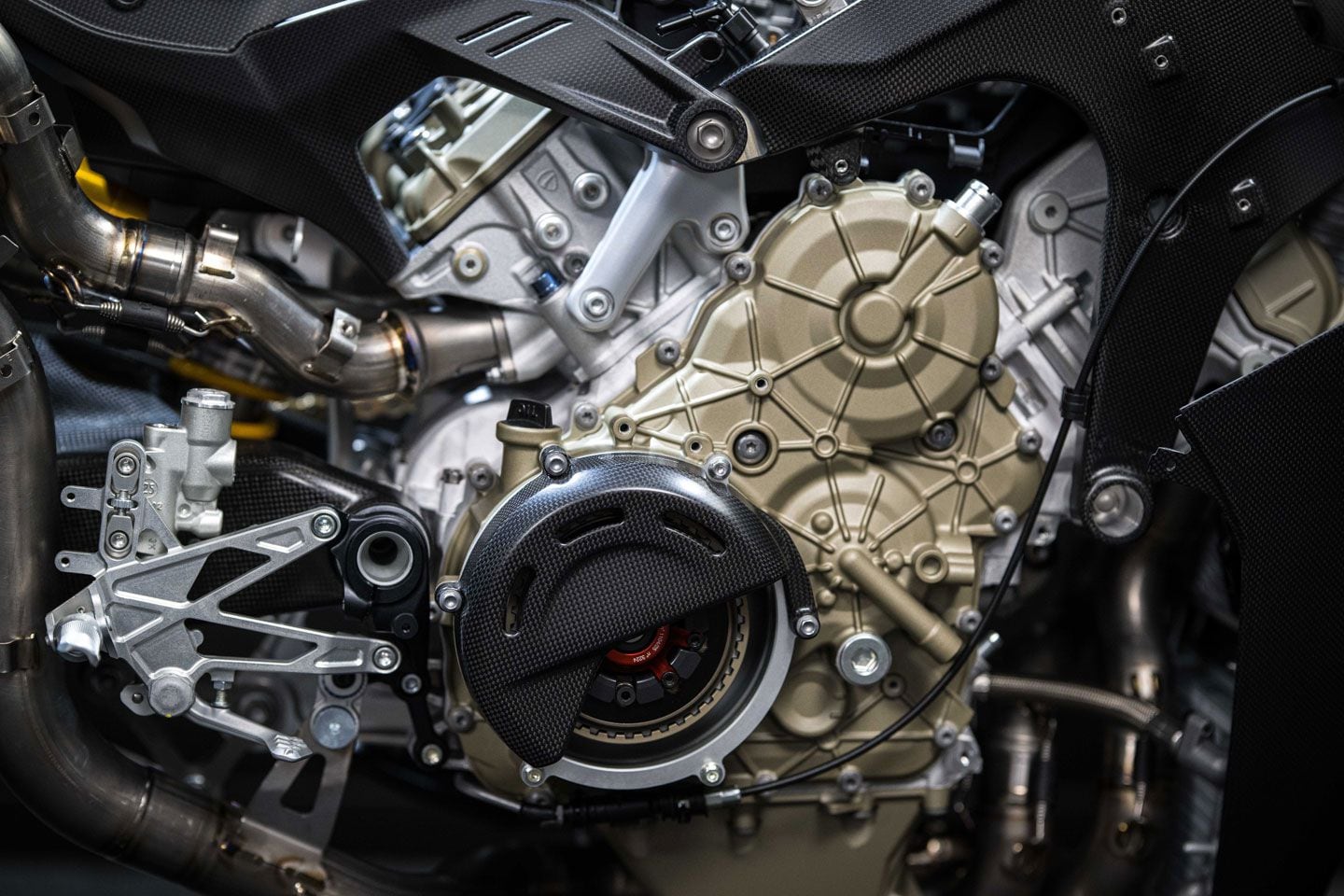
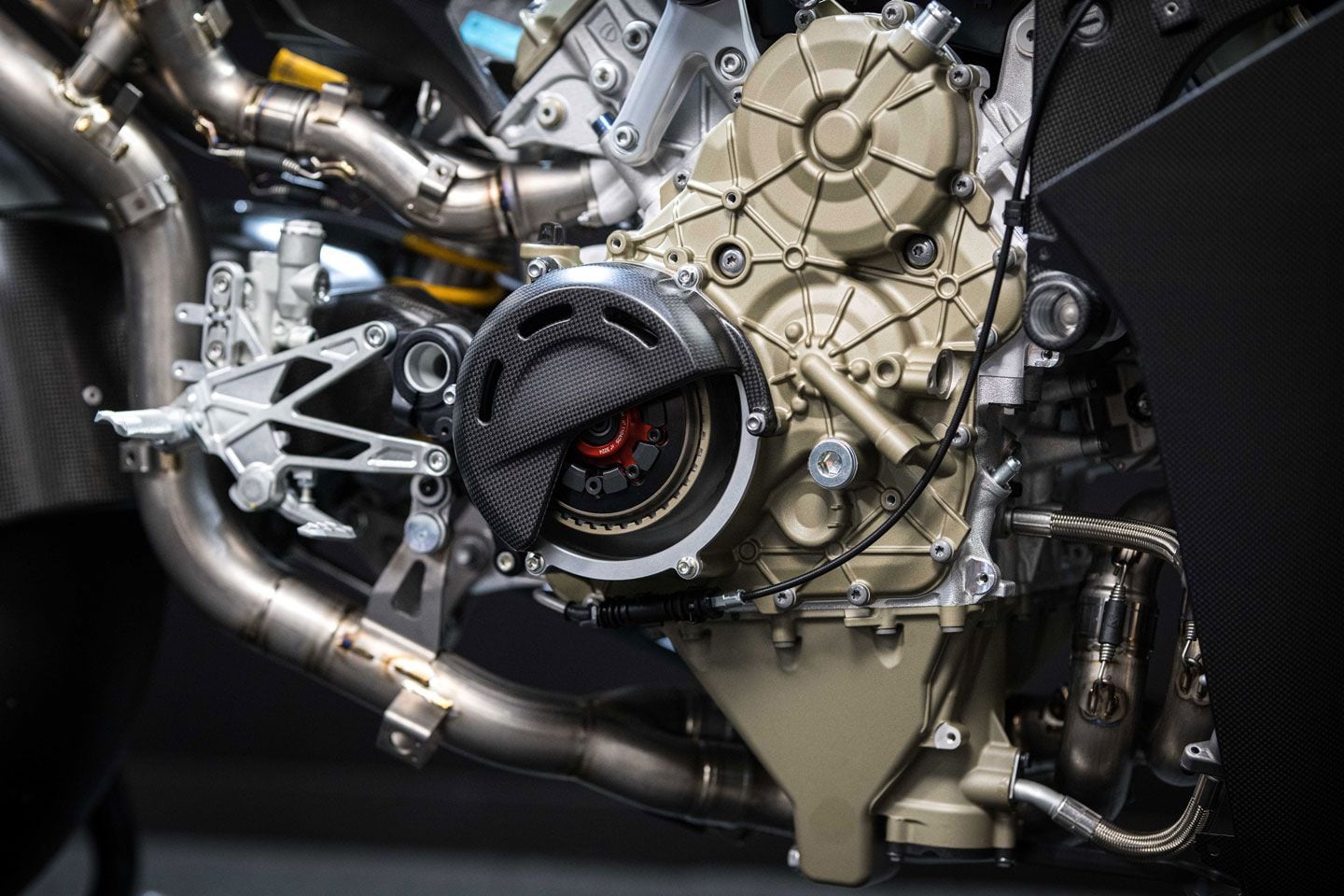
Why the STM REVO (aftermarket) dry clutch? Because it permits use of friction modifiers in the engine oil—additives that could cause a conventional wet clutch to slip. Additives that also liberate an extra 3.5 hp.
“Dedicated titanium connecting-rods” presumably means shared with no other model. This engine is 3.6 kg (7.9 lb) lighter than the Panigale V4. Forged pistons are referred-to as “box-in-box,” meaning that one box connects the edges of the piston skirts, with two cross walls that create a central box around the stubby 18mm piston pin. Pistons have two rings: a gas seal and an oil-scraper.
Up in the cylinder head, valve sizes are as on Panigale V4—34mm intakes, 27.5mm exhausts—but with a difference. The Superleggera’s intakes are titanium as on V4 R. The oval throttle bodies now measure 56mm, up from the 52mm of the Stradale V4 engine.
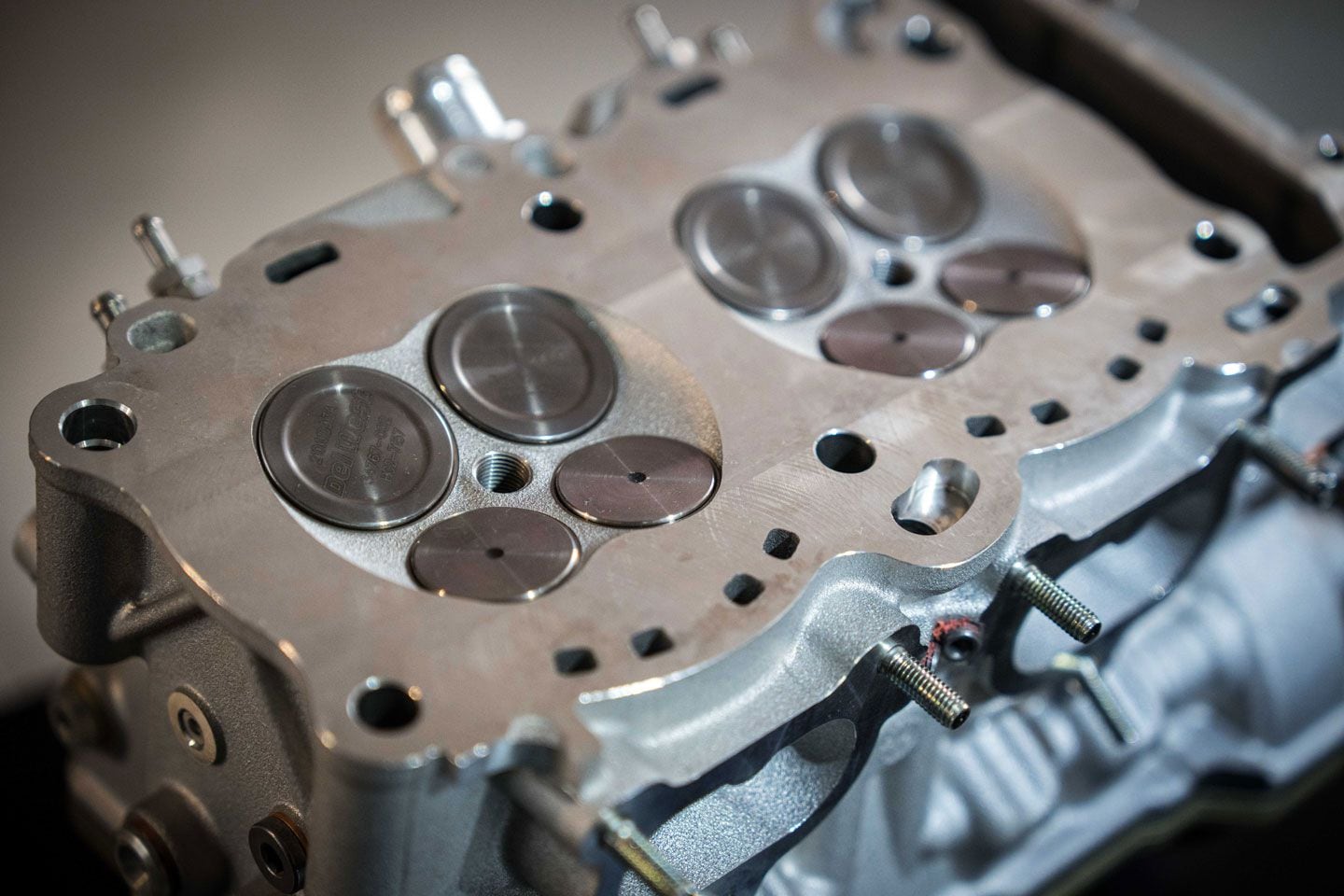
We want to know where the extra power is coming from. Altered cam timings, with later intake closure and extended overlap? More compression? Shorter combustion time, losing less heat to chamber surfaces? Please give us more!
Crankshaft
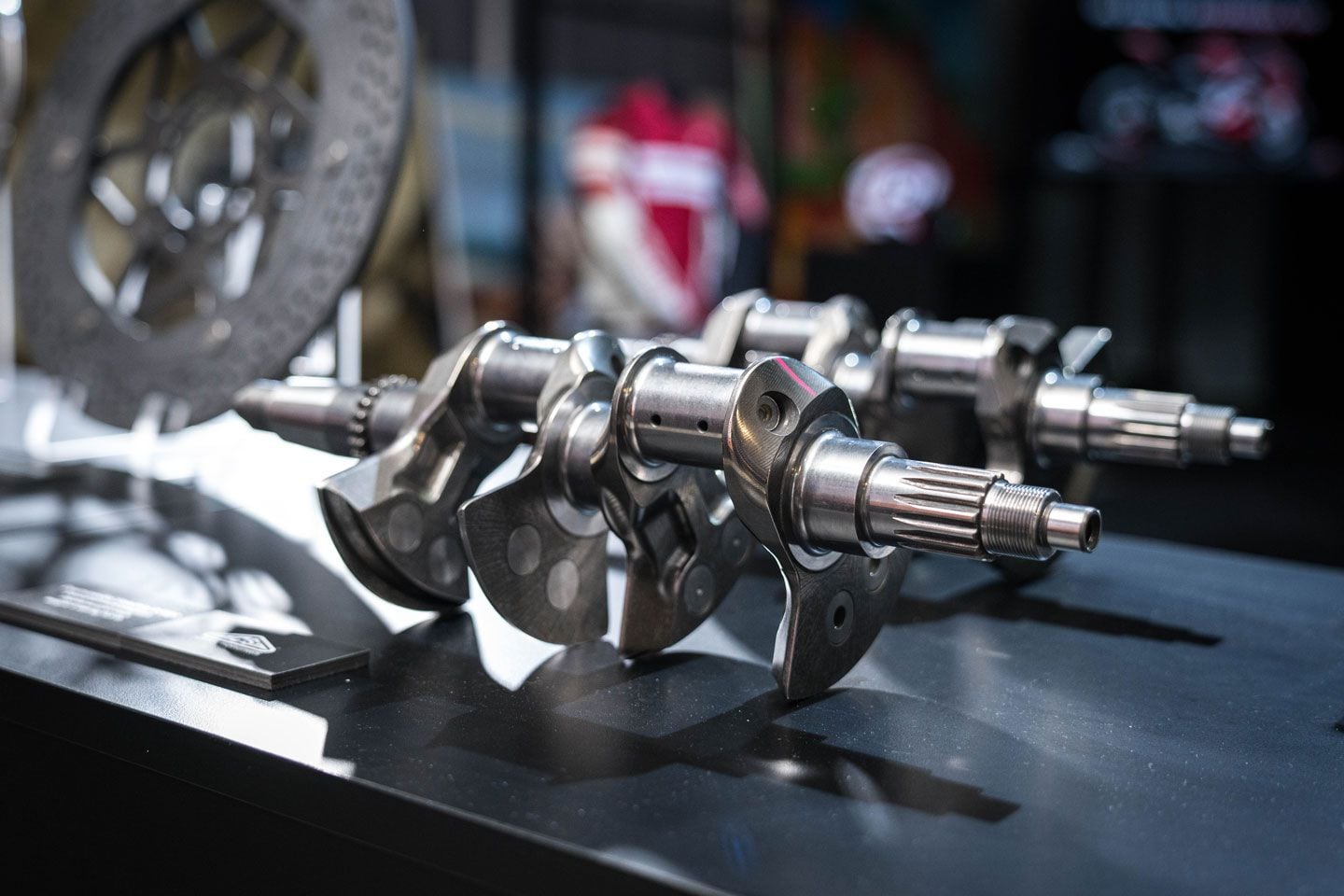
The crankshaft is lightened by concentrating mass in tungsten slugs, positioned at maximum radius and retained in minimal crank webs. Replacing steel with titanium fasteners saves another 0.9 kg (2 lb). Here I am curious; a lighter crank can mean increased peak loads on clutch and gearbox. It also means great crank speed variation as cylinder firings accelerate the crank, which slows as combustion pressure is released through the exhaust valves. This variation in crankshaft speed can set up vibration in the valvetrain to cause significant stress. Is desmo so robust that such action has no effect?
Suspension
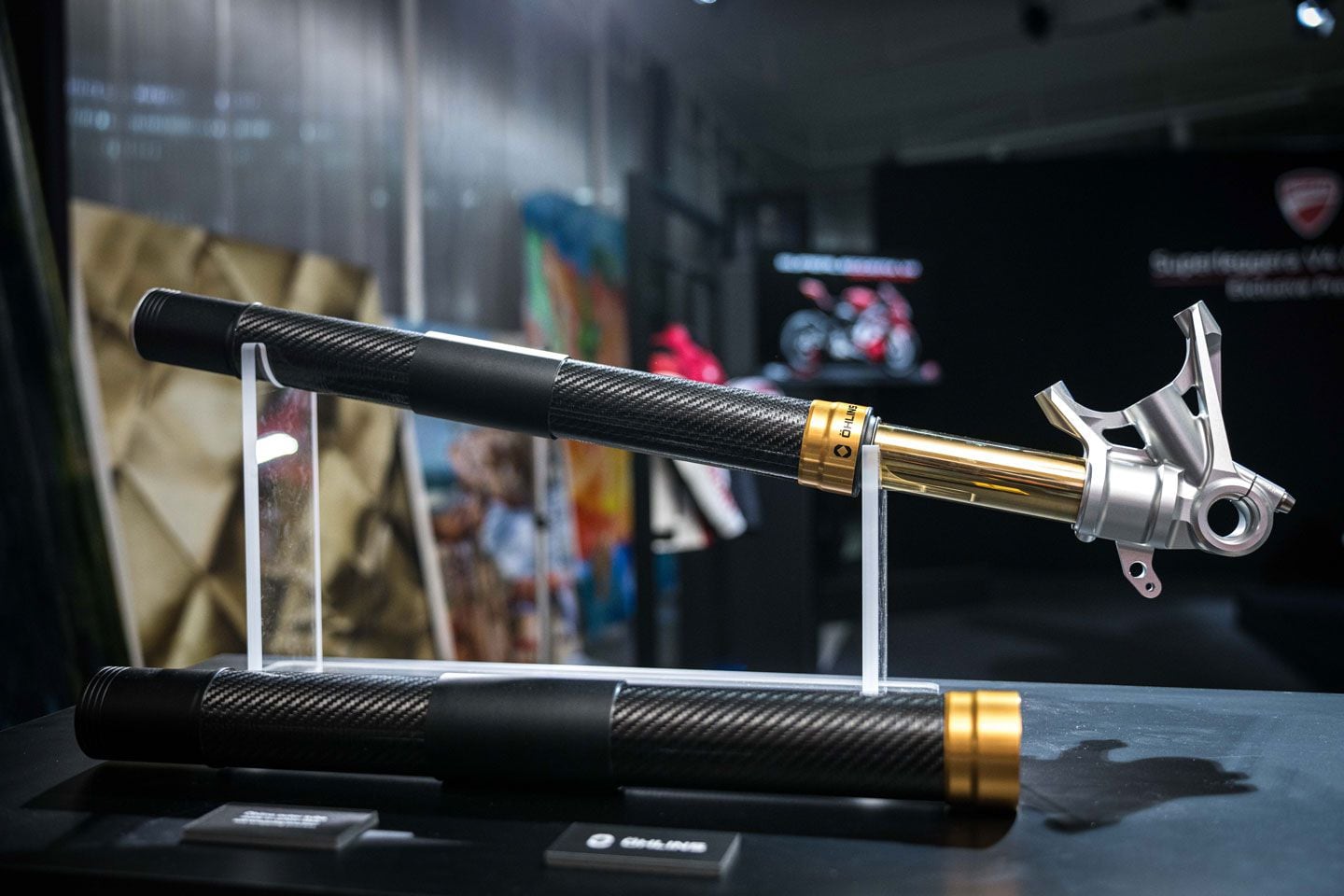
The fork is a 43mm carbon-fiber Öhlins NPX 25/30, which means it has pressurized damping cartridges to prevent cavitation. Compression damping is in one leg, rebound in the other. The fork bottoms, subject to powerful bending loads, are aluminum, machined from solid billet. Every time I look at modern fork bottoms, I think of powerful braking force being transmitted from the radial-mount calipers, through the bottoms, and into the screwed-in bottom ends of the tubes.
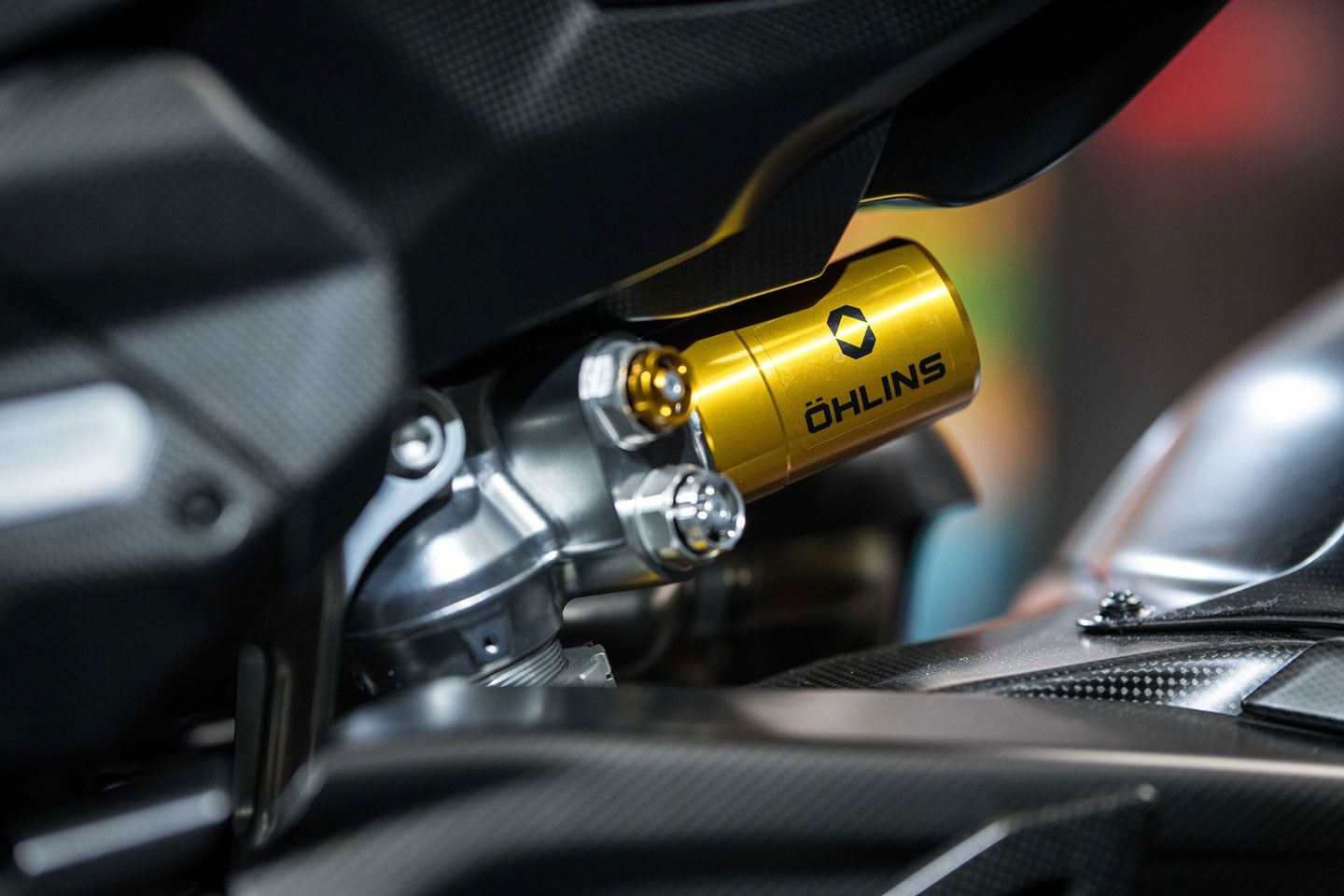
The rear suspension unit is an Öhlins TTX36 GP LW. As always, this describes a twin-tube unit with lightweight internals of refined design. A new steel alloy and heat-treat permit working the suspension spring harder, making it 27% lighter than before. What does “working it harder” mean? It means stressing the wire to a higher percentage of its yield strength.
Bodywork
Ducati describes this new creation as “Beauty designed by the wind.” As a boy, I marveled at how wind-driven snow could streamline stodgy 1950s cars, giving them long tapered tails and smoothing every discontinuity.
Electronics
Here is where we are supposed to list the acronyms of the many electronic systems, such as Rudge Twin-Vortex Drag Attenuation Gizmo (RTVDAG). I can’t make myself do it all, but I am very interested in DVO: Ducati Vehicle Observer. Using an algorithm developed by Ducati Corse, DVO monitors everything, calculates tire loads, and the maximum wheel torques available, moment-to-moment. It can, as an example, modulate engine-braking to prevent total torque on the rear wheel from exceeding the grip available. Step-by-step, we move closer to something like aviation’s digital flight control.
2027 Ducati Superleggera V4 Centenario Specs
| MSRP: | TBA |
| Engine: | Desmosedici Stradale R 1100 liquid-cooled, 90° desmodromic V-4; 16-valve |
| Displacement: | 1103cc |
| Bore x Stroke: | 81.0 x 53.5mm |
| Compression Ratio: | TBA |
| Transmission/Final Drive: | 6-Speed, neutral under first w/ Ducati Neutral Lock | Chain |
| Claimed Horsepower: | 225 hp |
| Claimed Torque: | TBA |
| Fuel System: | DFI w/ 56mm Oval throttle bodies, ride-by-wire |
| Clutch: | STM Revo dry, multiplate slipper; hydraulic actuation |
| Frame: | Carbon fiber |
| Front Suspension: | 43mm carbon-fiber Öhlins NPX 25/30 fork |
| Rear Suspension: | Öhlins TTX36 GP LW monoshock |
| Front Brake: | Brembo Hyction CCB 340mm ceramic/carbon discs, radial-mount 4-piston GP4-HY calipers, 4-level cornering ABS |
| Rear Brake: | Brembo 2-piston caliper, 4-level cornering ABS |
| Wheels, Front/Rear: | Carbon fiber |
| Tires, Front/Rear: | TBA |
| Rake/Trail: | TBA |
| Wheelbase: | TBA |
| Ground Clearance: | TBA |
| Seat Height: | TBA |
| Fuel Capacity: | TBA |
| Claimed Wet Weight: | 381.4 lb |
| Contact: | Ducati |